The Bill Is the Most
Sensitive Touchpoint.
Optimum's legacy interactive and PDF bills were outdated, failing to meet modern consumer expectations for clarity. The lack of transparency caused "Bill Shock" — customers encountering unexpected charges they couldn't explain — driving high call volumes to support centers and eroding trust at exactly the wrong moment.
Working with the Senior Director of Mobile, I led a style and structural refresh of the billing ecosystem. My goal was to move beyond a static receipt and create a proactive tool that surfaced "Pending Actions" and "Bill Changes" to resolve customer anxiety before it escalated to a support call.
Unlike most top-down mandates, this project was a self-elected initiative — born from a direct need to solve operational pain points. No formal PM, no roadmap slot. Just a clear problem and the conviction to lead it.
Four Obstacles.
Four Solutions.
This project was initiated by my Senior Director and myself without a formal PM or roadmap slot. Leading this at a grassroots level meant I owned scope, timeline, and stakeholder communication simultaneously.
I acted as the de facto project lead — defining scope and timeline while leading all UX/UI updates. To scale the research effort, I mentored my direct report on research synthesis, ensuring the qualitative data from moderated sessions was distilled into actionable leadership insights.
Because this wasn't an official directive, we had to build internal support from the ground up. Without a PM assigned, every decision required personal coalition-building across functions.
I conducted an internal "Road Show" — presenting designs and research data to cross-functional teams to build a coalition of support. It was only after securing this grassroots alignment and reaching VP-level presentations that a formal PM was assigned to the project.
The Fixed Business (Home) side was already under contract with a third-party vendor for their billing UI and PDF rendering. My designs couldn't simply override the vendor's implementation.
I used our moderated user research as strategic leverage. By proving the "Changes to Bill" section was a primary user need with evidence, I influenced the vendor's roadmap to incorporate my design elements — ensuring brand parity despite external constraints.
Designing for legacy billing systems (Amdocs) meant navigating rigid backend architectures. Not everything we wanted to design was technically buildable within the current stack.
I initiated direct technical consultations with engineering teams early in the process. We "T-shirt sized" every feature, aligning on a scope that was ambitious for users but realistic for developers — preventing late-stage de-scoping surprises.
Proactive.
Not Reactive.
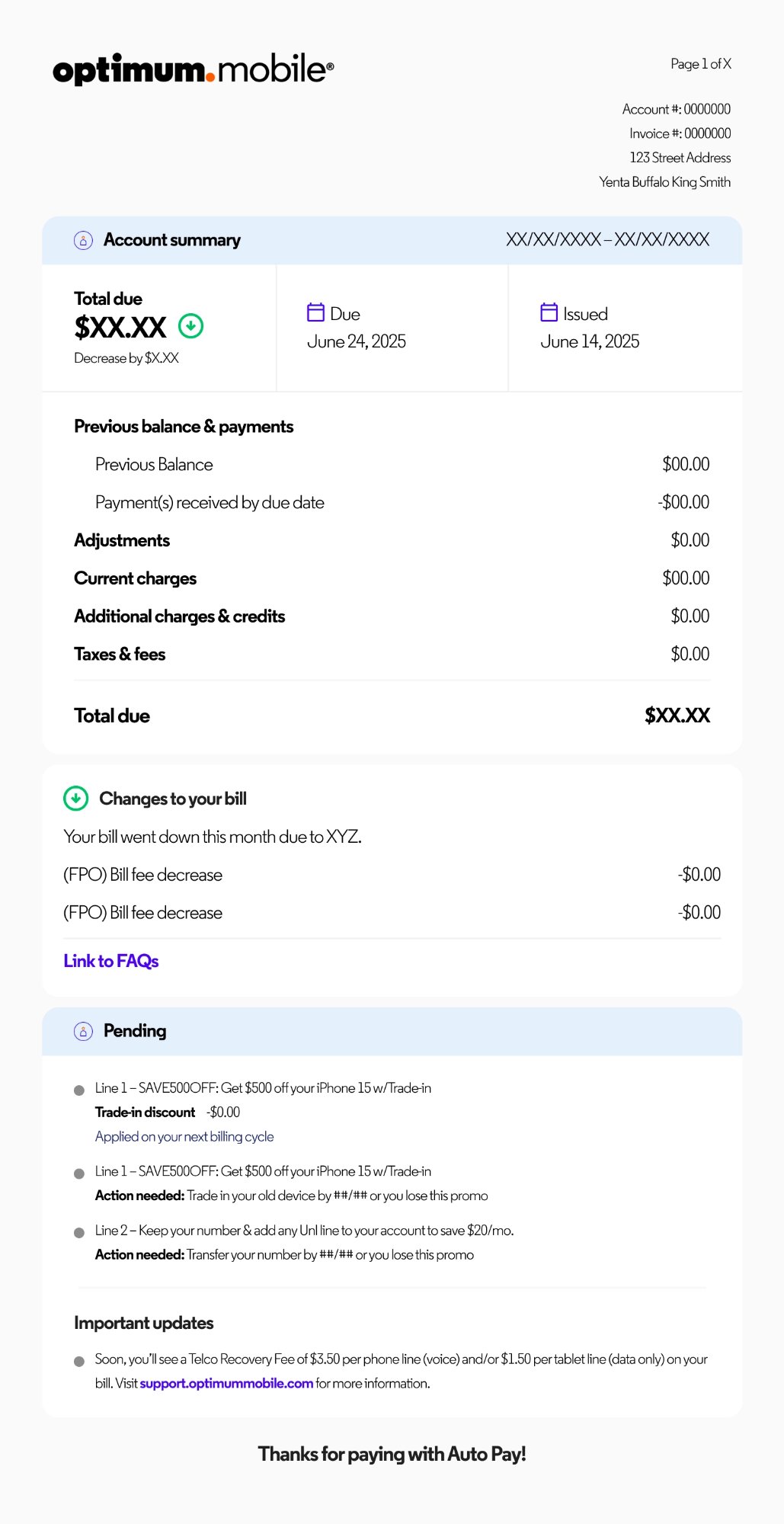
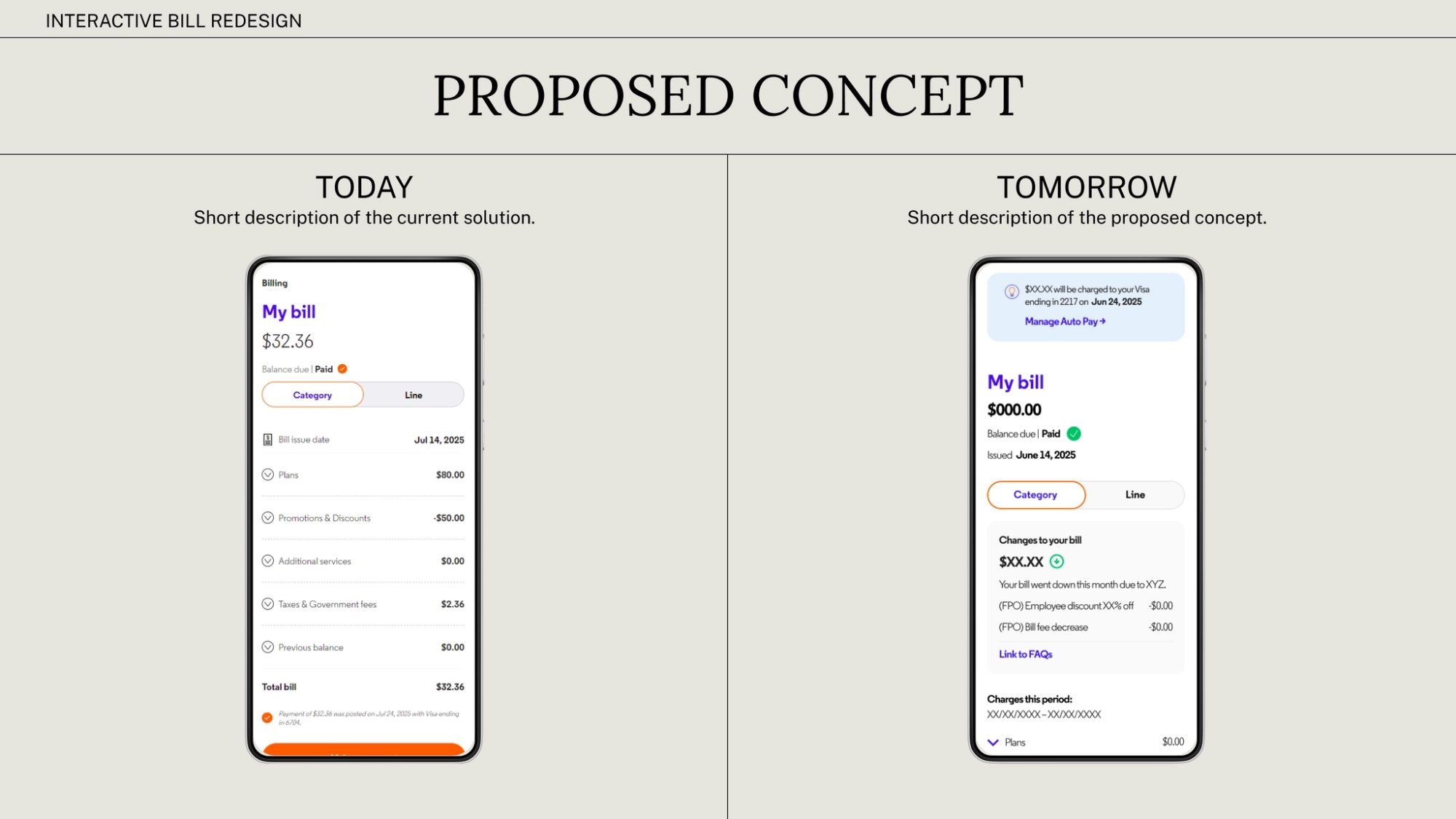
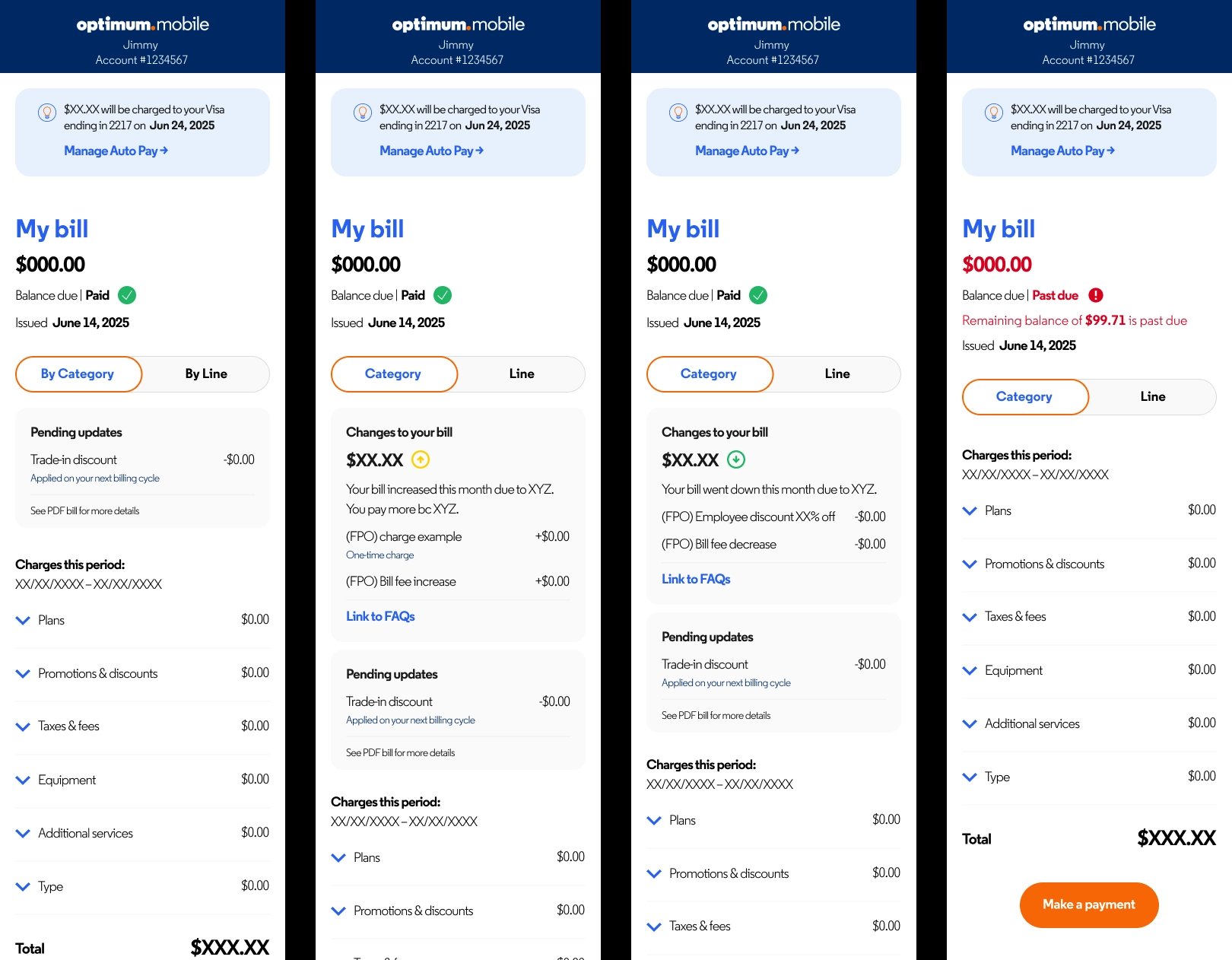
I redesigned the Self-Care Interface and the PDF Bill simultaneously to ensure a seamless cross-channel experience. The strategy was to modernize without alarming long-term customers by completely breaking their mental model.
A dedicated section for both the web interface and PDF to explicitly explain price fluctuations — "Promo Expired," "Plan Change," "Bill Fee Decrease." Turns a confusing number into a transparent explanation.
A proactive feature alerting customers to tasks required to maintain their discounts — port-in promo deadlines, next billing cycle discounts. Resolves anxiety before it becomes a support call.
Restructured the PDF hierarchy for scannability — allowing users with professional reimbursement needs to find relevant data instantly. Discovered through research: one participant regularly screenshots her bill for corporate expense reports.
Validated by
the Customer.
To validate the redesign, I conducted moderated usability tests with current Optimum Mobile customers. I focused on user intent: why are they looking at the bill, and does this new UI satisfy that intent?
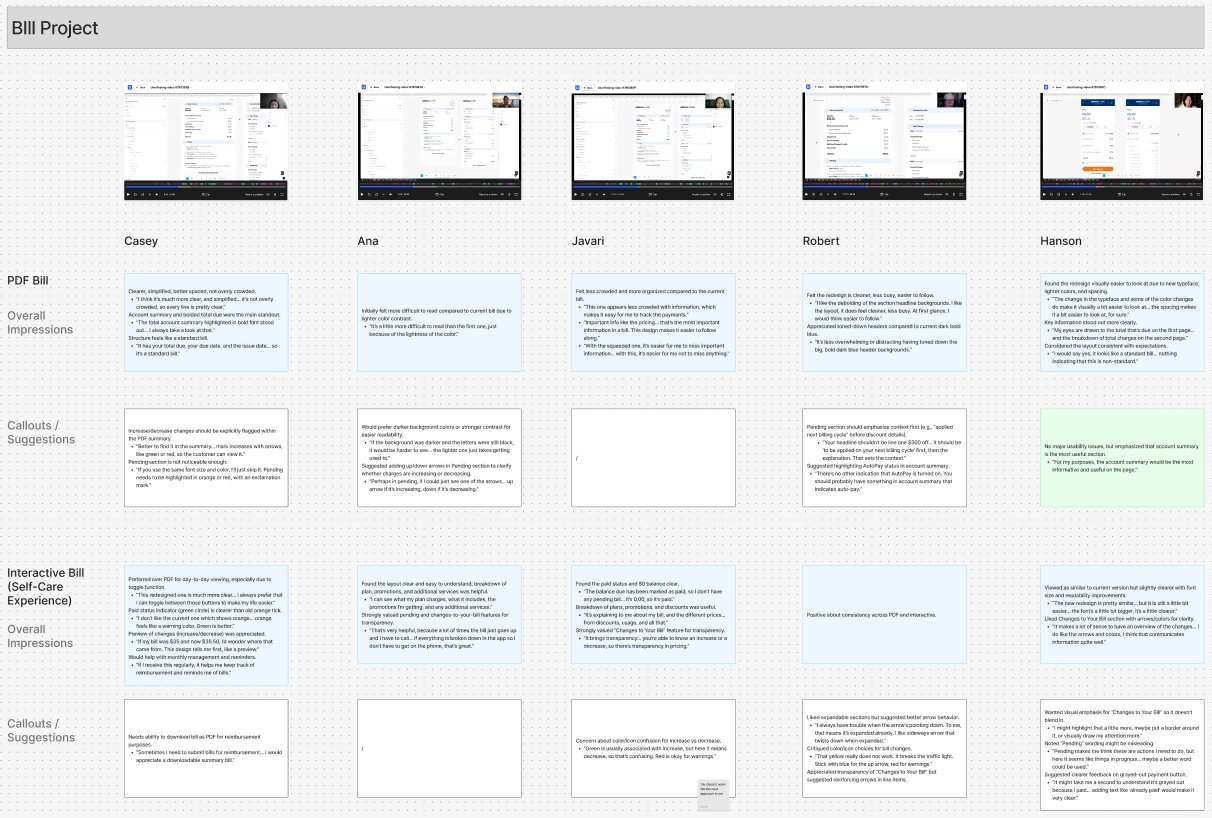
One participant revealed she screenshots her bill for company reimbursement — validating the need for a high-contrast, professional PDF layout that reads cleanly out of context.
70% of participants stated that the "Changes to My Bill" section changed their emotional response to a bill increase. Instead of calling out of frustration, they felt equipped to have a productive conversation with an agent.
The data proved that transparency doesn't just reduce calls — it improves the quality of the calls that do happen. By giving the customer and agent a shared source of truth, Average Handle Time (AHT) is reduced and customer satisfaction improves even in the moment of a complaint.
Evidence-Based.
Organization-Wide.
changed emotional response
to bill increases
reduction through
proactive transparency
Mobile + Fixed Business
vendor roadmap
alignment secured
Evidence-Based Design: Shifted the conversation from "subjective styling" to "objective business value" using moderated user testing data. Research made the project defensible at every level of the organization.
Cross-Business Influence: While Fixed Business had already signed with a third-party vendor for their billing UI, the research was compelling enough that elements of the "Changes to Your Bill" design are being integrated into the vendor's interface — ensuring brand and functional parity despite external constraints.
Operational Readiness: The Mobile Selfcare billing updates are slated for initiation, serving as the blueprint for the wider organization's transparency efforts. This project will set the standard for how Optimum communicates billing changes across all customer touchpoints.